A practical digital marketing guide for small businesses in Nepal — what actually works, what to skip, and the platform risk most local guides ignore.
A pattern shows up in almost every first meeting we have with a Nepali business owner. They open a laptop and show us the Facebook page — tens of thousands of followers, built over years, most of it organic. There's real pride in it, and there should be. Then comes a simple question: of the customers who walked in last month, how many came from that page?
Almost nobody knows. Nobody has ever asked them to find out.
That gap — between having a presence and having a system — is where most small businesses in Nepal are stuck. Not because owners are lazy or uninformed. Because the advice circulating in this market is mostly channel advice, and channel advice is the least useful kind.
Start with the half of the country that isn't online
Nepal had roughly 16.6 million internet users at the end of 2025, which works out to about 56 percent of the population. Social media accounts for around 14.8 million identities, close to half the country.
Now hold that against a different number. In early 2026, the Nepal Telecommunications Authority reported broadband penetration of 145.69 percent. More subscriptions than people. Both figures are accurate; they measure different things. NTA counts connections, and a Kathmandu professional with two SIMs and a fibre line at home is three data points. The Nepal Living Standards Survey 2022/23, meanwhile, found only about 40 percent of households have internet at home.
Why does this matter to a business owner? Because marketing plans get built on the biggest number in the room. We've watched businesses budget for a national digital campaign on the assumption that everyone is reachable, then wonder why the numbers came in at a third of projection. Roughly 13 million people in Nepal are still offline, and they are not distributed evenly. They skew rural, older, and lower-income.
If you sell agricultural inputs in Dang, a digital-first strategy is a mistake, not a modernisation. If you run a dental clinic in Lalitpur, it's obvious. Most businesses sit somewhere between, and the honest answer is that digital should carry part of the load, not all of it.
The September lesson: you are renting your customers
On 4 September 2025, Nepal blocked 26 platforms — Facebook, Instagram, YouTube, X, WhatsApp, LinkedIn and others — for failing to register with the government. The Cabinet withdrew the block four days later, on 8 September, after protests that killed at least 19 people that week; the wider unrest that followed left many more dead. TikTok had been banned separately in November 2023, with the Cabinet agreeing to lift it in August 2024 and access returning that September. Telegram was blocked in July 2025.
Three shutdowns in under two years. The Social Media Directive that made them possible is still law.
Set aside the politics. As a business risk, this is the single most under-discussed fact in Nepali marketing, and almost no local guide mentions it. If your customer relationships live entirely inside a Meta page, you don't own those relationships. You're renting them, from a landlord who has been evicted before.
The businesses that shrugged through that week had something in common. They had phone numbers. Viber groups. A customer list in a spreadsheet, or a website that kept taking enquiries while pages went dark. The ones that panicked had 40,000 followers and no way to reach a single one of them.
What "owned" actually means
Owned means you can contact a customer without a platform's permission. A phone list qualifies. A Viber broadcast group qualifies, mostly. A website with a working enquiry form qualifies. Your Google Business Profile sits somewhere in between — Google owns it, but it has never been switched off here.
Collecting numbers is unglamorous work. Ask at the counter. Offer something small for a repeat visit. Put a form on the site that asks for a phone number rather than an email, because Nepali customers answer phones and ignore inboxes. Do this for a year and you'll have an asset no policy change can take away.
Pick one platform properly instead of five badly
Facebook's advertising reach in Nepal was equivalent to about 89.6 percent of the country's internet users in October 2025. Instagram showed a potential ad audience of roughly 4.35 million, around a quarter of the online population, concentrated in urban areas and younger age brackets. Both are platform-reported reach estimates rather than headcounts, which is worth remembering before you build a forecast on them. TikTok is large and still generous with organic reach, though its Nepal user count comes from agency estimates rather than published platform data, so treat any specific figure with suspicion.
Reach is the wrong criterion anyway.
The question isn't where the most people are. It's where the people who spend money on your category make their decisions. A momo restaurant and an audiology clinic selling hearing aids at NPR 250,000 should run completely different playbooks, and yet we regularly see them running identical ones — daily posts, boosted occasionally, no offer, no measurement.
Facebook still carries the broadest and oldest audience in Nepal, which makes it the default for local retail, services, and anything bought by someone over 35. Instagram works when the product photographs well and the buyer is urban and under 35. TikTok can produce absurd reach from nothing, but that reach is volatile and skews toward entertainment rather than purchase intent — good for awareness, unreliable as a sales channel. LinkedIn has a small Nepali user base, which is exactly why it works for firms selling B2B services or exporting to clients abroad: less noise, better targeting.
One platform run seriously will beat four run casually. That's not a productivity tip, it's arithmetic. Attention and budget divided four ways produces four campaigns below the threshold where anything measurable happens.
The most common mistake we see is treating posting frequency as strategy. Posting is not marketing. Posting is inventory. Marketing is the offer, the audience, and the way you find out whether it worked.
Search is where intent lives, and almost nobody competes there
Someone scrolling Facebook is not looking for you. Someone typing "orthodontist Baneshwor" into Google is looking for you right now, with a wallet.
Search intent in Nepal is badly underserved. Competition for local commercial queries is thin compared to India or the Gulf, which means a modest, well-built site can rank for terms that would be unattainable in a mature market. That window will not stay open forever.
A few things behave differently here. Nepali customers frequently search in Romanised Nepali or mix scripts — "sasto laptop Kathmandu", "ghar bhada Lalitpur" — and content written only in formal English misses those queries entirely. We know this pattern from client search data; we're not aware of reliable public figures on how the query volume splits between scripts, so anyone quoting a precise percentage is guessing.
Your Google Business Profile is the highest-return hour of work available to a small business in Nepal. Correct hours, real photos, the right category, and a habit of asking satisfied customers for reviews. It costs nothing and it feeds the map results where local buyers actually look.
Do you even need a website?
Sometimes, no. A single-location tea shop does not need one. A business that sells anything considered — services, equipment, education, travel, healthcare — does, because buyers research before they contact you and a Facebook page answers almost none of their questions.
What a small business website needs is unfashionably short: what you sell, what it costs or how pricing works, where you are, proof that other people bought from you, and a phone number that a thumb can tap. It should load on a weak mobile connection in a few seconds. Most Nepali business sites fail on that last point alone, usually because someone installed a template stuffed with sliders and stock photography of white people in glass offices. When we take on site rebuilds at Webpal, cutting weight out is usually a bigger conversion win than any redesign.
Getting paid is part of your marketing
Look at what happened to payments. QR transaction value in Nepal rose from about NPR 20.28 billion in FY 2020/21 to roughly NPR 958 billion in FY 2024/25. Mobile banking went from around NPR 460 billion to over NPR 5 trillion in the same window. Wallet users climbed from roughly 6.3 million in 2020 to more than 28 million by mid-2026.
Nepali customers stopped being afraid of paying digitally somewhere around 2023. Many businesses haven't caught up.
Every step between wanting to buy and being able to pay is a leak. If a customer has to message you, wait for a reply, ask for account details, screenshot a transfer, and wait again for confirmation, you will lose a meaningful share of them — not to a competitor, but to fatigue. A Fonepay QR at the counter and a clear payment path on your site are conversion improvements disguised as accounting decisions.
Cash on delivery deserves scrutiny. It genuinely lifts order rates because it removes trust risk from the buyer. It also transfers the entire risk to you: refused parcels, return freight, capital tied up for weeks. Nepal's e-commerce operators don't publish return-to-origin rates, so nobody can give you a national number. Track your own for three months. Small sellers are often startled by what they find.
Settle one legal point before scaling any of this. The E-Commerce Act took effect in April 2025 and covers businesses selling through a Facebook or Instagram page, not only proper online stores. Registration is required and penalties attach. Plenty of social sellers don't know it exists.
If you serve tourists or export, watch cross-border QR. Monthly transactions grew from roughly 38,000 in early 2025 to over 325,000 by mid-2026 — small, growing fast, and largely ignored by Nepali merchants.
The measurement problem nobody admits
Here is the uncomfortable truth about analytics in Nepal. Most small business sales close somewhere a dashboard cannot see: a Viber message, a phone call, a walk-in, a cousin's recommendation. You can run a flawless campaign and have your analytics report almost nothing.
The response should not be to buy more software. It should be to ask.
"How did you hear about us" — asked at the counter, written in a notebook, tallied weekly — outperforms every attribution tool available to a business at this scale. Use a separate phone number for campaigns if you can. Give offers distinct codes. Compare enquiry volume in weeks you advertise against weeks you don't.
Businesses often assume that because a metric is precise, it is important. Reach, impressions and follower counts are precise and nearly worthless. Enquiries, quotes issued, and repeat purchase rate are messy and tell you almost everything. Organic reach on business pages has been falling for years across markets — Nepal is no exception, though the specific numbers you'll see quoted locally come from agency blogs rather than any audited source.
A realistic first year
The mistake is starting with channels. Start with sequence.
For the first three months, fix the fundamentals: a Google Business Profile that's accurate, a site that loads fast and states your prices, a working way to take payment, and a system for capturing customer phone numbers. No advertising yet. Advertising into a broken funnel is how businesses conclude that "digital marketing doesn't work here."
Months four to eight, pick one platform and one offer. Spend an amount you can lose without pain. Measure enquiries, not likes. Kill what fails quickly and repeat what works longer than feels comfortable.
After that, expand — a second channel, better content, maybe search advertising if your margins support it.
On who does the work: freelancers are the right answer more often than agencies admit, particularly at smaller budgets where an agency's overhead eats most of the spend. Agencies earn their fee when the work spans strategy, site, ads and measurement together, and when someone has to be accountable for the number at the end. We turn down plenty of enquiries at Webpal for exactly this reason — a business that needs one good freelancer should hire one good freelancer.
What goes wrong, repeatedly
Chasing followers instead of customers. Rebuilding the website every eighteen months instead of improving the one you have. Copying a competitor's tactics without knowing whether they're working — the shop running ads constantly may simply be losing money faster. Discounting as a reflex, which trains your market to wait. Going quiet for four months and expecting the algorithm to forgive you.
And the one that costs most: measuring nothing, then deciding based on feel. Businesses discover too late that they spent two years and several lakh rupees without ever knowing which half of it worked.
Nepal's digital market is still young enough that ordinary discipline beats clever tactics. The businesses that win here over the next few years won't be the ones with the best content. They'll be the ones who own their customer list, know their numbers, and stayed consistent while everyone else chased the next platform.
Frequently asked questions
How much should a small business in Nepal spend on digital marketing? There's no honest universal figure, and be sceptical of anyone who quotes one. A workable approach is to start with an amount you could lose entirely without harming operations, run it for three months, and let measured results decide the next increase. Businesses with high-value products can justify far more per customer than a low-margin retailer.
Is Facebook still worth it in Nepal, or has TikTok taken over? Facebook still reaches the broadest audience in Nepal by a wide margin, including the older, higher-spending buyers most local businesses depend on. TikTok offers better organic reach and a younger audience, but attention there converts less predictably. For most businesses the answer isn't either — it's whichever one your paying customers actually use.
Do I need a website if I already have a Facebook page? If you sell anything customers research before buying, yes. A page can't hold your pricing, service details, or proof of past work in a way people can find later. There's also the ownership question: platforms in Nepal have been blocked three times since 2023, and a website is one of the few assets that stays up regardless.
Should I accept cash on delivery? It raises order volume and lowers buyer hesitation, which is real. It also loads you with refused deliveries, return shipping and delayed cash. Track your own return rate for a quarter before deciding — national figures aren't published, so your own data is the only reliable guide.
How long before digital marketing produces results? Search and content work compound slowly, often six months or more. Paid social can generate enquiries within days but stops when the budget stops. Most businesses need both, and the common failure is abandoning the slow one three months in because the fast one felt more satisfying.
Can I do this myself instead of hiring someone? For the basics — Google Business Profile, review collection, consistent posting, capturing customer numbers — yes, and you'll probably do it better than an outsider because you know your customers. Bring in help for the parts with technical failure modes: site performance, ad account structure, and measurement.
Working out where to start? Webpal has been building websites and digital systems for Nepali businesses from Kathmandu for years. Send us what you're currently doing and what isn't working — we'll tell you honestly whether you need us or not.
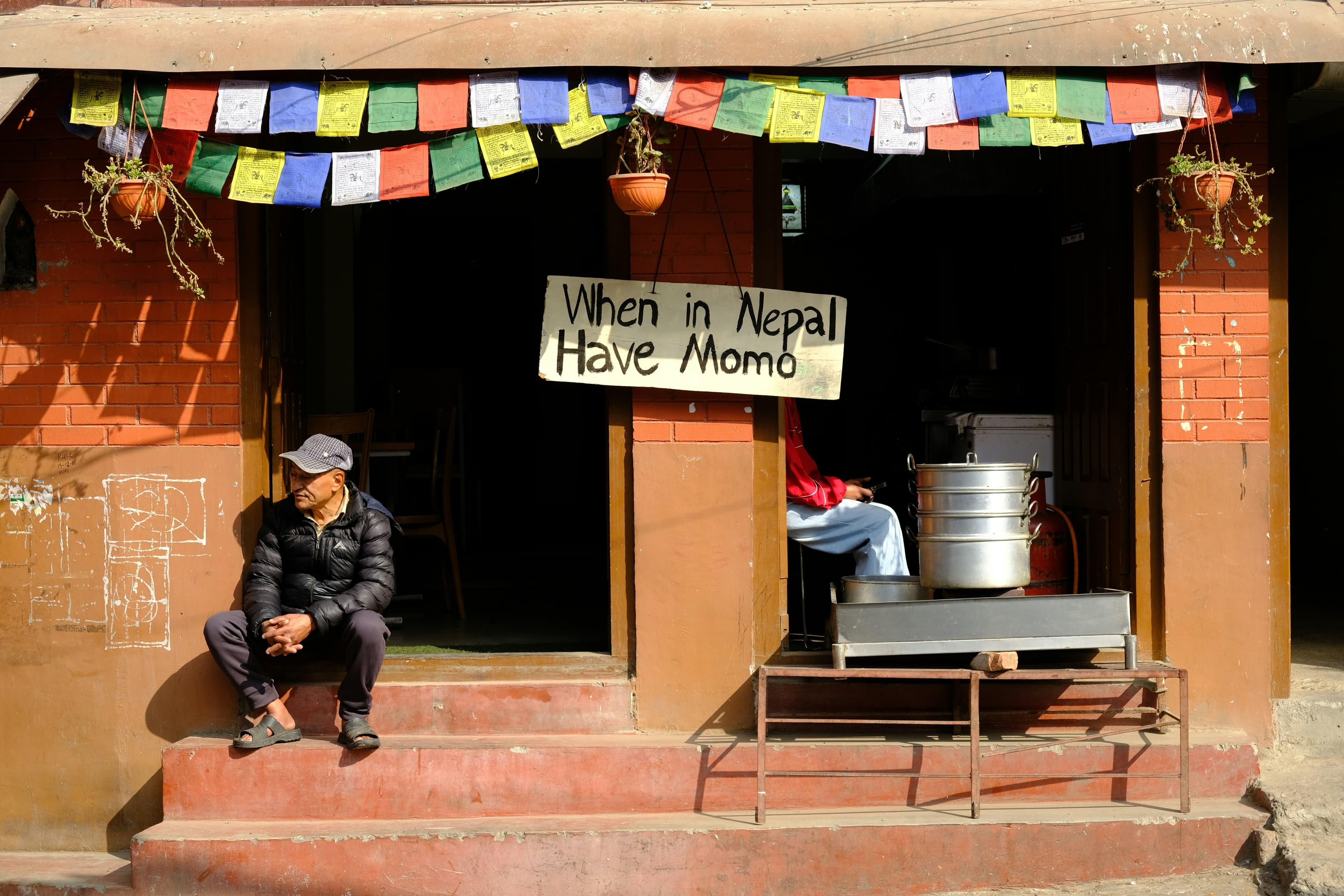
Photo by Ravi Sharma on Unsplash